
Optometrist vs Ophthalmologist: What’s the Difference? (Berry & Nowra Guide)
Not Sure Whether to See an Optometrist or an Ophthalmologist? Start Here
If you’re experiencing vision problems or it’s simply time for an eye check, you might be wondering:
“Should I see an optometrist or an ophthalmologist?”
It’s a common question for patients across Berry, Nowra and the Shoalhaven—and the answer is simpler than most people expect.
👉 In most cases, you should start with an optometrist.
Here’s why.
What Does an Optometrist Do?
An optometrist is your primary eye care provider and the first point of contact for most eye concerns.
At Rose Optometry, our optometrists:
Perform comprehensive eye examinations
Prescribe glasses and contact lenses
Diagnose and manage many eye conditions
Screen for diseases like glaucoma, macular degeneration and diabetic eye disease
Use advanced imaging to detect problems early
Therapeutically Endorsed Optometrists – What Does That Mean?
All of our optometrists are therapeutically endorsed, which means they are qualified to prescribe medications and actively manage a wide range of eye conditions.
This allows us to:
Treat eye infections and inflammation
Manage dry eye and allergic conditions
Begin treatment immediately when needed
Reduce unnecessary referrals
For patients, this means faster care and better outcomes.
What Does an Ophthalmologist Do?
An ophthalmologist is a medical doctor who specialises in eye surgery and complex medical eye conditions.
They typically:
Perform procedures such as cataract surgery
Treat advanced or complex eye diseases
Provide specialist medical and surgical care
You will usually need a referral to see an ophthalmologist and access Medicare rebates.
Optometrist vs Ophthalmologist: What’s the Key Difference?
Optometrist: First point of care for eye tests, prescriptions, and most eye conditions
Ophthalmologist: Specialist for surgery and complex or advanced conditions
For the majority of people, an optometrist can assess, diagnose, and often treat your condition—referring you only if necessary.
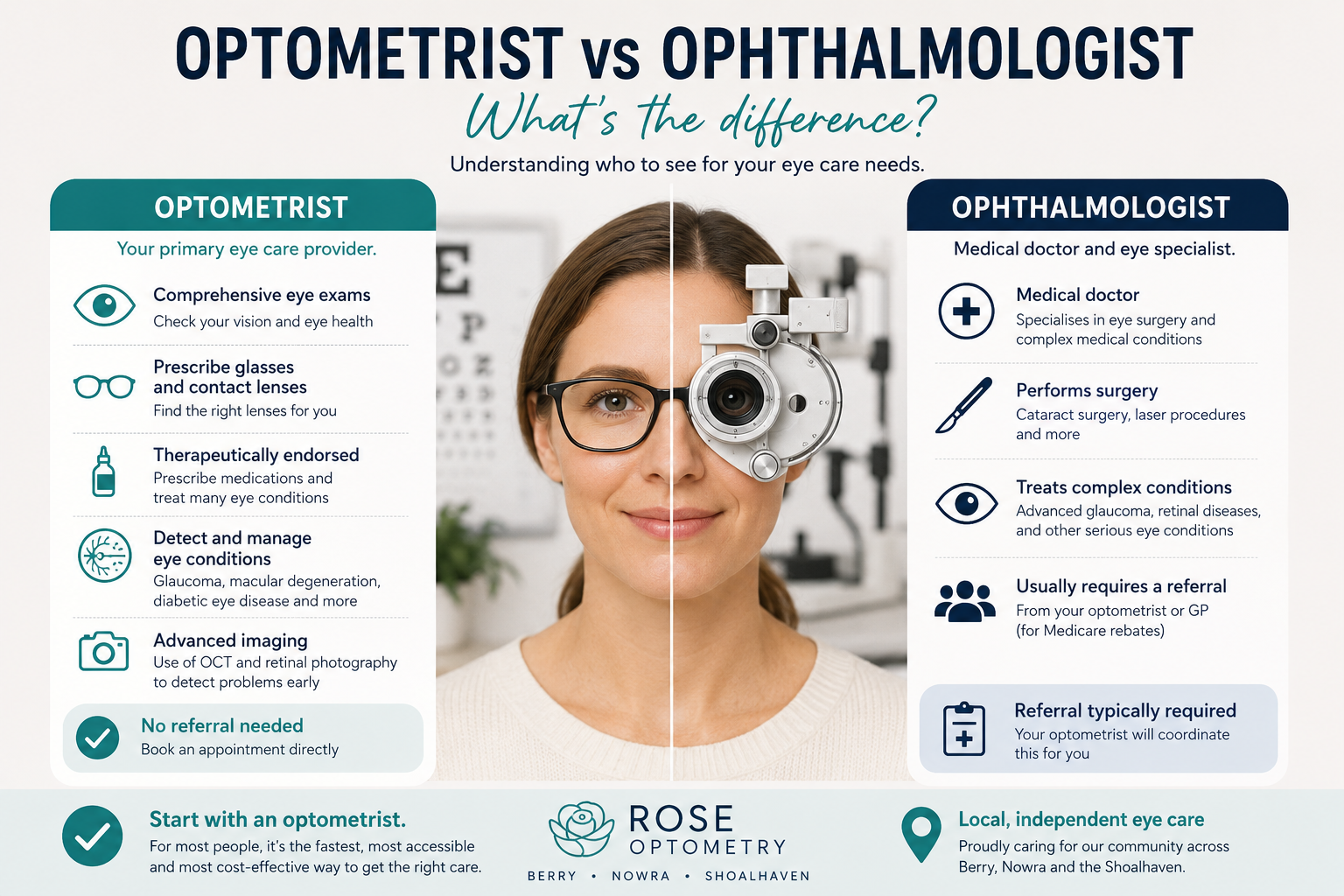
Understanding the difference between Optometrist & Ophthalmologist.
Should I See an Optometrist or Ophthalmologist First?
In most cases, you should see an optometrist first.
This ensures:
Faster access to care
Early detection of serious conditions
Immediate treatment where appropriate
Referral only when truly needed
It’s the most efficient and cost-effective pathway for managing your eye health.
Do I Need a Referral to See an Ophthalmologist in Australia?
Usually, yes.
To receive a Medicare rebate, you’ll typically need a referral from:
An optometrist, or
A GP
In most cases, your optometrist will coordinate your referral, provide detailed clinical findings, and guide how urgently you should be seen by an ophthalmologist.
Can an Optometrist Prescribe Medication in Australia?
Yes—if they are therapeutically endorsed.
At Rose Optometry, all of our optometrists can prescribe medications to treat:
Eye infections (e.g. conjunctivitis)
Inflammation and allergies
Dry eye disease
Certain ongoing eye conditions
This means many issues can be treated immediately, without needing to wait for a specialist appointment.
What Conditions Can an Optometrist Treat?
Optometrists can manage a wide range of eye conditions, including:
Dry eye and irritation
Eye infections and redness
Allergic eye conditions
Glaucoma (monitoring and co-management)
Macular degeneration (early detection and monitoring)
With modern technology and therapeutic endorsement, optometrists play a key role in ongoing eye health care.
When Should You See an Ophthalmologist?
You may be referred to an ophthalmologist if:
Surgery is required (e.g. cataracts)
A condition is advanced or complex
Specialist medical treatment is needed
Your optometrist will guide this process and ensure you’re referred appropriately.
Are Eye Tests Bulk Billed in Berry and Nowra?
Yes—standard comprehensive eye tests are bulk billed through Medicare for eligible patients.
At Rose Optometry:
Your initial eye test is typically bulk billed
Additional testing (such as advanced retinal imaging) may involve a small fee
Some health funds may provide rebates for these tests
We always explain any costs clearly before proceeding.
How Often Should You Have an Eye Test?
For most adults, every 1–2 years is recommended.
You may need more frequent eye tests if you:
Have an existing eye condition
Have diabetes
Notice changes in your vision
Have a family history of eye disease
Regular eye exams are essential for early detection and prevention.
Can I Go Straight to an Ophthalmologist?
You can—but it’s usually not necessary.
Starting with an optometrist:
Saves time
Improves access to Medicare rebates
Ensures you’re directed to the right level of care
Most eye concerns can be assessed—and often treated—without needing a specialist.
Local Eye Care in Berry & Nowra
At Rose Optometry, we’re proud to provide independent, locally focused eye care for patients across Berry, Nowra and the Shoalhaven.
With therapeutically endorsed optometrists, advanced diagnostic technology, and strong relationships with ophthalmologists, we ensure you receive the right care at the right time.
Book Your Eye Test in Berry
If you’re unsure where to start, start with a comprehensive eye test.
Whether it’s a routine check-up or a specific concern, we’re here to help.
Rose Optometry
📍 14 Alexandra Street, Berry NSW
📞 02 4216 8628
