
Cataracts - Things you Should Know
Quick Take:
Cataracts are a common cause of cloudy or blurry vision, especially as we get older. They usually develop slowly and may first appear as glare, trouble seeing at night, or needing frequent glasses updates. Regular eye tests can detect cataracts early, and surgery is a safe and highly effective treatment when needed.
What Are Cataracts?
A cataract occurs when the natural lens inside your eye becomes cloudy. The lens normally helps focus light clearly onto the retina. When it becomes cloudy, vision becomes blurred, dim, or hazy.
Cataracts are very common, particularly over the age of 60, and are one of the leading causes of vision changes later in life.
The Three Main Types of Cataracts
There are three main types of cataracts, and the type you have can influence your symptoms.
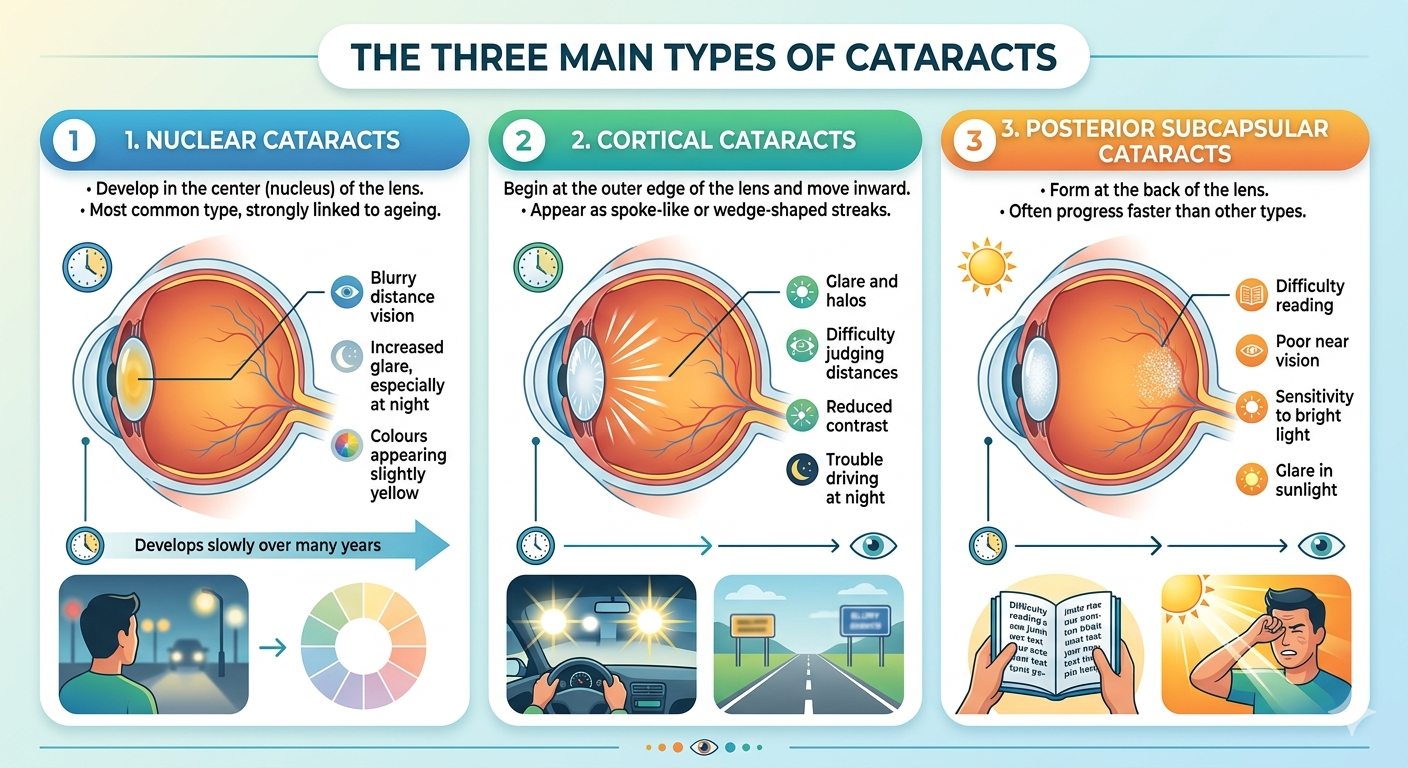
Three main types of cataracts are Nuclear, Cortical, Posterior Subcapsular Cataract.
1. Nuclear Cataracts
Nuclear cataracts develop in the centre (nucleus) of the lens. They are the most common type and are strongly linked to ageing.
The lens gradually hardens and yellows over time, which can cause:
Blurry distance vision
Increased glare, especially at night
Colours appearing slightly yellow
These usually develop slowly over many years.
2. Cortical Cataracts
Cortical cataracts begin at the outer edge of the lens and move inward. They often appear as spoke-like or wedge-shaped streaks.
Common symptoms include:
Glare and halos
Difficulty judging distances
Reduced contrast
Trouble driving at night
3. Posterior Subcapsular Cataracts
Posterior subcapsular cataracts form at the back of the lens. They often progress faster than other types.
They commonly cause:
Difficulty reading
Poor near vision
Sensitivity to bright light
Glare in sunlight
These can noticeably affect vision even when distance vision seems reasonable.
What Are the Early Signs of Cataracts?
Cataracts usually develop gradually. Many people don’t notice symptoms straight away.
Early signs may include:
Blurry or cloudy vision
Trouble seeing at night
Glare or halos around lights
Colours looking faded or yellow
Needing brighter light for reading
Vision feeling misty or dim
One of the most common early signs is needing to update your glasses more often — but still not feeling like your vision is quite right.
Cataracts typically do not cause eye pain. If you are experiencing discomfort, redness, or sudden vision changes, this should be assessed promptly.
If any of these symptoms sound familiar, it’s worth booking an eye test at Rose Optometry.
Stages of Cataracts
Cataracts usually progress in stages:
Early Stage
The lens begins to cloud, but symptoms may be mild. Cataracts are often first detected during a routine eye examination.
Developing Stage
Cloudiness increases. Vision may become blurrier, glare worsens, and night driving becomes harder. Glasses may need updating more frequently.
Mature Stage
The lens becomes significantly cloudy. Daily tasks like reading and driving are affected. Surgery is often recommended at this stage.
Hypermature Stage
Vision is severely reduced. If untreated, the lens may harden or cause inflammation and increased eye pressure. Surgery is required.
Regular eye examinations allow cataracts to be monitored safely and managed at the right time.
What Causes Cataracts?
The most common cause of cataracts is ageing. Over time, proteins in the lens naturally break down and clump together, creating cloudiness.
However, several factors increase risk:
Being over 60
Diabetes
Long-term steroid use
Smoking
Excess UV exposure without sunglasses
Previous eye surgery or injury
Family history of cataracts
How to Reduce Your Risk
While cataracts cannot always be prevented, you can help protect your eyes by:
Wearing sunglasses that block 100% UVA and UVB
Managing diabetes carefully
Avoiding smoking
Attending regular eye examinations
Do Cataracts Always Need Surgery?
Not immediately.
In early stages, cataracts can often be managed with updated glasses and improved lighting. Surgery is usually considered when cataracts begin to significantly affect daily activities such as driving, reading, or work.
Cataract surgery involves replacing the cloudy lens with a clear artificial lens. It is one of the most commonly performed and successful surgeries worldwide. Most people notice clearer vision within days.
How Are Cataracts Diagnosed?
During your eye examination, your optometrist will ask about your symptoms and how your vision is affecting your daily life.
We may perform:
Visual acuity testing (reading letters on a chart)
Slit-lamp examination to assess the lens
Retinal examination, sometimes using dilating drops
Refraction testing to check if glasses improve your vision
If glasses no longer provide clear vision, cataracts may be the cause.
Medicare often covers your comprehensive eye examination, but occasionally extra testing may be required and a small provide fee may be charged.
When Should You Book an Eye Test?
You should book an eye test if you notice:
Increasing glare at night
Difficulty reading
Colours appearing dull
Frequent prescription changes
Vision that feels cloudy or dim
If you’re over 60, regular eye examinations are especially important.
Book an Eye Test in Berry
If you’re concerned about cataracts or changes in your vision, we’re here to help.
At Rose Optometry, we provide comprehensive eye examinations, clear explanations, and personalised advice about monitoring or referral for cataract surgery when appropriate.
