
Can Optometrists Treat Dry Eyes?
Dry eye disease is one of the most common reasons patients experience eye discomfort, irritation, and fluctuating vision. A frequent question is whether optometrists can diagnose and treat dry eyes, or whether specialist care is required.
The short answer is yes—optometrists are trained to diagnose and manage most cases of dry eye disease.
At Rose Optometry, we provide structured, evidence-based dry eye care aligned with modern clinical understanding, including principles outlined in the TFOS DEWS III Report.
What is Dry Eye Disease?
Dry eye disease is a multifactorial condition affecting the tear film and ocular surface. It occurs when the balance and stability of the tear film is disrupted, leading to irritation, inflammation, and visual disturbance.
Rather than being a single disease, dry eye is typically driven by a combination of:
Tear film instability (Excess or lack of tears)
Meibomian gland (eyelid) dysfunction (Oil gland issue)
Reduced tear production
Ocular surface inflammation
Neuropathic or sensory changes
Because multiple factors are often involved, symptoms can vary widely between individuals and require tailored treatment.
Common Symptoms of Dry Eye
Patients in Berry, Nowra, and the wider Shoalhaven commonly present with:
Gritty or sandy sensation in the eyes
Burning or stinging discomfort
Fluctuating or blurry vision
Watery eyes (reflex tearing)
Contact lens discomfort
Tired or strained eyes, especially with screen use
Symptoms often worsen with prolonged digital device use, air conditioning, wind exposure, or ageing.
How We Diagnose Dry Eye
At Rose Optometry, dry eye diagnosis involves more than just identifying dryness—it focuses on understanding the underlying cause.
We use a combination of clinical examination and validated symptom scoring tools, including the OSDI-6 (Ocular Surface Disease Index), which helps quantify symptom severity and how dry eye is affecting daily function and vision.
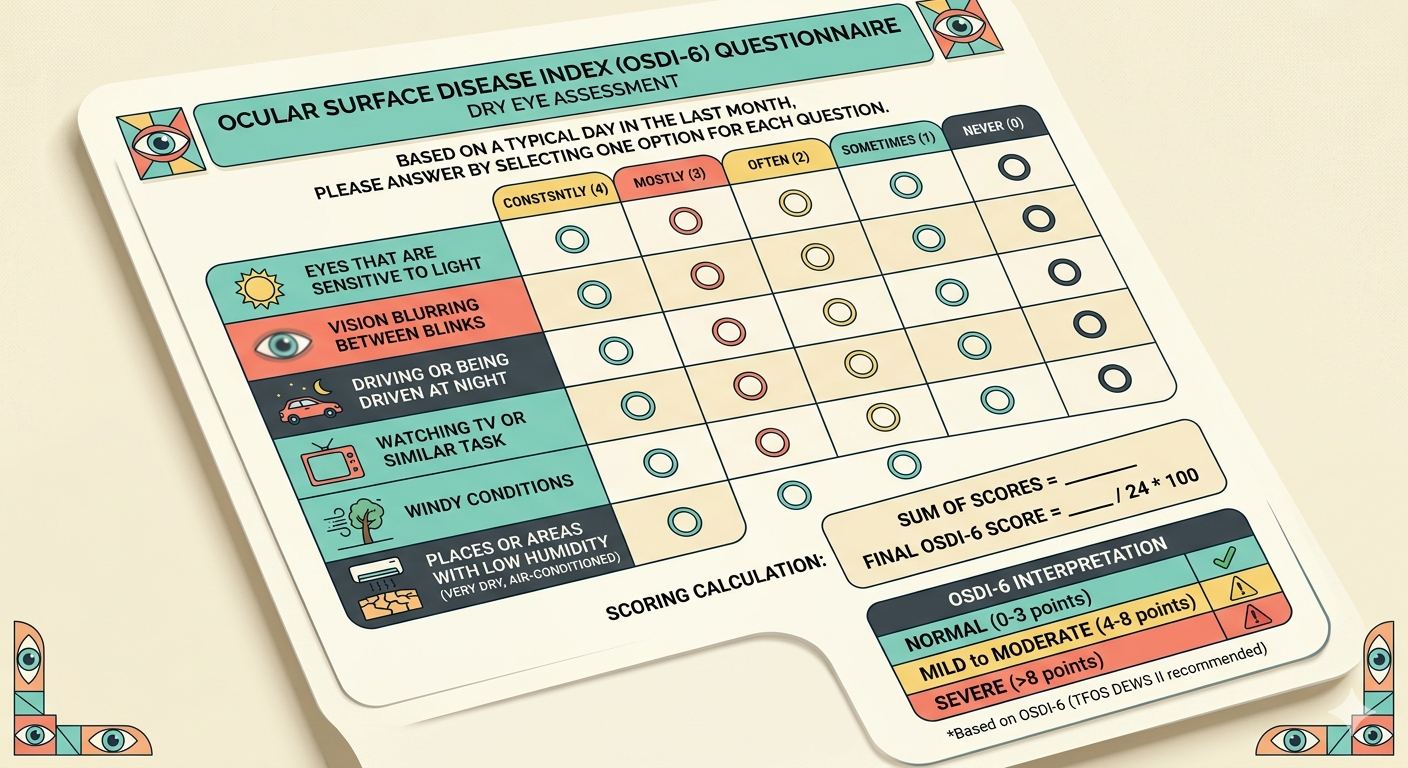
OSDI-6 Questionnaire used to in diagnosis and management of dry eye.
This is combined with a detailed assessment of:
Tear film stability
Eyelid and meibomian gland function
Ocular surface health and inflammation
Tear production levels
Environmental and lifestyle contributors
As AHPRA-registered and therapeutically endorsed optometrists, we are also able to prescribe certain medications where clinically appropriate and co-manage more complex cases with general practitioners and ophthalmologists.
This structured diagnostic approach aligns with modern dry eye management principles, including TFOS DEWS III guidance, which emphasises identifying the underlying drivers of disease rather than treating symptoms alone.
How We Treat Dry Eye at Rose Optometry
Treatment is always tailored to the underlying cause and severity of disease. Our approach is guided by a simple principle:
Use the minimum necessary treatment to achieve maximum comfort and long-term stability.
1. Lid Hygiene and Meibomian Gland Treatment
A major contributor to dry eye is dysfunction of the oil glands in the eyelids.
Management may include:
Medical-grade lid hygiene routines
Warm compress therapy
In-clinic lid margin treatment (BlephEx-style debridement)
These therapies help restore tear film stability and reduce evaporation.
2. Anti-inflammatory Treatment
Inflammation plays a key role in ongoing dry eye disease.
Where appropriate, we can prescribe:
Anti-inflammatory eye drops
Prescription therapies such as ciclosporin-based medications (e.g. Ikervis where indicated and accessible)
These treatments address the underlying inflammatory cycle rather than just symptom relief.
3. Lubrication Therapy
We provide tailored advice on:
Preservative-free artificial tears
Selection of drops based on dry eye subtype
Appropriate dosing schedules
Correct drop selection is essential for effective symptom control.
4. Oral Supplements
In selected cases, nutritional support may assist tear quality and gland function.
This may include:
Omega-3 fatty acid supplementation
Targeted nutritional support based on gland function and clinical findings
5. Co-Management with Doctors and Ophthalmologists
For more complex or persistent cases, we work closely with:
General practitioners for systemic or oral therapies
Ophthalmologists for advanced medical or procedural care
This ensures patients receive coordinated care across all levels of treatment.
Dry Eye vs Allergic Eye Disease
Dry eye disease and allergic eye disease can present with similar symptoms such as redness, irritation, and watering.
However, they are fundamentally different conditions:
Dry eye is driven by tear film instability, inflammation, and gland dysfunction
Allergic eye disease is driven by immune response to environmental allergens
Because management differs significantly, accurate diagnosis is essential for effective treatment.
Dry Eye Treatment in Berry and the Shoalhaven
Rose Optometry provides dry eye assessment and management for patients across:
Berry
Nowra
Bomaderry
Cambewarra
Shoalhaven Heads
Kiama and surrounding regions
Many patients present after long periods of managing symptoms without a clear diagnosis. Once the underlying cause is identified, treatment can often be simplified and significantly more effective.
When Should You See an Optometrist?
You should book a comprehensive eye examination if you experience:
Persistent dryness, irritation, or discomfort
Fluctuating or unstable vision
Frequent use of over-the-counter eye drops
Discomfort with screen use or reading
Ongoing eye fatigue
Early assessment allows for more targeted and effective treatment.
Book a Dry Eye or General Eye Test
If you are experiencing symptoms of dry eye, the first step is a comprehensive eye examination.
At Rose Optometry, we assess your tear film, eyelid health, and ocular surface using structured clinical testing, including validated symptom scoring tools, to develop a personalised treatment plan.
📍 Serving Berry and the wider Shoalhaven region
📅 Book a dry eye consultation or general eye test today at Rose Optometry
