
Pterygium: What Is Surfer’s Eye and How Can You Protect Your Eyes?
If you live around Berry, Nowra, Kiama, Gerringong or the wider Shoalhaven, chances are you spend plenty of time outdoors. Whether it is walking along the beach, fishing, surfing, boating, playing sport, working outdoors or simply enjoying the South Coast lifestyle, your eyes are exposed to sunlight and ultraviolet (UV) radiation.
Over many years, this exposure can contribute to an eye condition called a pterygium, sometimes known as “surfer’s eye.”
At Rose Optometry in Berry, we regularly examine the front surface of the eye as part of a comprehensive eye examination and can identify pterygia, monitor their progression and discuss ways to protect your eyes.
What is a pterygium?
A pterygium is a fleshy, triangular growth of tissue that develops on the white part of the eye (conjunctiva) and can gradually extend onto the clear front surface of the eye, the cornea.
It most commonly develops on the side of the eye closest to the nose.
A pterygium can be small and cause no noticeable symptoms, but some can gradually become larger and more noticeable. In more advanced cases, it can affect the cornea and potentially interfere with vision.
Pterygia are strongly associated with cumulative exposure to UV radiation. Outdoor lifestyles, dry conditions, wind and dust can also contribute to irritation of the ocular surface.
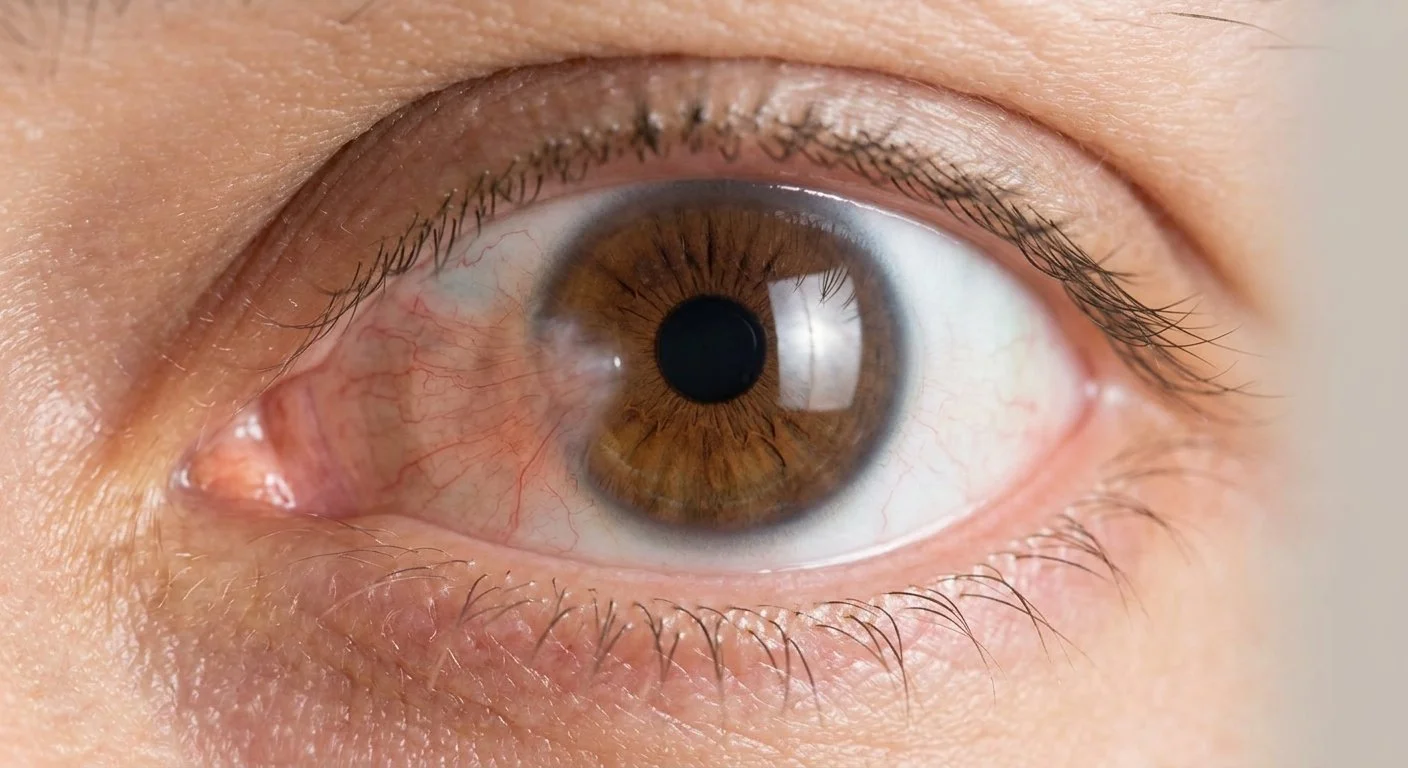
Pterygium - growing closer to the pupil
Why are pterygia associated with beaches and outdoor activities?
The South Coast is a wonderful place to spend time outdoors, but that also means significant opportunities for cumulative UV exposure.
UV radiation does not only reach your eyes directly from the sun. Light can also be reflected from surfaces around you, including water and sand.
People who regularly spend long periods outdoors may therefore have greater cumulative ocular UV exposure.
Australian research has found an association between pterygium and lifetime exposure to sunlight. In a large Victorian population study of adults aged 40 and over, pterygium was more common among rural residents and was independently associated with lifetime ocular sun exposure.
Another Australian study of Norfolk Island residents found that spending more than three-quarters of the day outdoors was significantly associated with the presence of pterygium.
This does not mean that everyone who spends time outdoors will develop a pterygium. Genetics, age and other environmental factors also appear to play a role.
What does a pterygium look like?
A pterygium often appears as a raised, wedge-shaped or triangular area of tissue growing from the white of the eye towards the cornea.
It can look:
White or fleshy
Pink or red when irritated
More prominent after prolonged time outdoors
Like a small growth on the surface of the eye
Some people notice the appearance themselves, while others only discover it during an eye examination.
A related condition called a pinguecula can also occur on the conjunctiva. A pinguecula is usually a yellowish or raised area on the white of the eye and does not grow onto the cornea in the same way as a pterygium.
What symptoms can a pterygium cause?
Small pterygia may cause no symptoms at all.
As a pterygium becomes larger or inflamed, symptoms can include:
Redness
Irritation or burning
A gritty or sandy feeling
Dryness
Watering
A foreign-body sensation
Increased sensitivity to wind or sunlight
Blurred or distorted vision
A larger pterygium can alter the shape of the cornea and induce astigmatism, which may affect the quality of vision. If it grows towards the centre of the cornea, it can eventually interfere with the visual axis.
Can a pterygium be prevented?
You cannot completely eliminate your risk of developing a pterygium, but reducing UV exposure to your eyes is an important part of prevention.
For people who spend a lot of time outdoors, we recommend making eye protection part of the normal outdoor routine.
Wear good-quality sunglasses
Choose sunglasses that provide effective UV protection.
Wraparound or close-fitting sunglasses can provide additional protection from sunlight entering around the sides of the frame.
This is particularly useful when you are fishing, boating, surfing, walking on the beach or spending extended periods outdoors.
Wear a broad-brimmed hat
A broad-brimmed hat provides additional protection for your eyes, face and surrounding skin.
Healthdirect recommends sunglasses with good UV protection together with a sun hat as part of protecting your eyes from UV radiation.
Don't forget about cloudy days
UV radiation is not restricted to bright, sunny days.
If you are spending significant time outside, particularly around reflective surfaces such as water and sand, eye protection remains important.
Protect your eyes from wind and dust
Wind, dust and other environmental irritants can contribute to ocular surface irritation.
If you are working outdoors, gardening, riding, boating or participating in other activities where dust or debris is present, appropriate protective eyewear can help protect the surface of the eye.
Can a pterygium go away by itself?
Once a true pterygium has developed, it generally does not simply disappear.
However, symptoms such as irritation and dryness can often be managed.
Lubricating eye drops may help relieve discomfort, particularly when the ocular surface is dry or irritated. More significant inflammation may require treatment prescribed by an eye-care professional.
Regular monitoring can also help determine whether the pterygium is changing or progressing towards the cornea.
Does a pterygium need surgery?
Not every pterygium requires surgery.
If a pterygium is small and not affecting your vision or causing significant symptoms, your optometrist may simply recommend monitoring it and managing any associated irritation.
Surgery may be considered when a pterygium:
Causes persistent irritation despite treatment
Is progressively increasing in size
Causes significant astigmatism or blurred vision
Approaches or interferes with the visual axis
Causes significant cosmetic concern
Restricts normal eye movement in more advanced cases
Pterygium surgery involves removing the abnormal tissue, and techniques such as conjunctival autografting may be used to reduce the risk of recurrence.
A decision about surgery should be made after an appropriate eye examination and, where necessary, referral to an ophthalmologist.
What if I have a red or irritated eye?
Not every red or irritated eye is a pterygium.
Dry eye, allergies, infection and other conditions can cause similar symptoms. There are also other, less common lesions that can resemble a pterygium.
For this reason, a new or changing growth on the eye should be examined rather than simply assumed to be a pterygium.
An eye examination allows us to assess the appearance of the lesion, its position, whether it is extending onto the cornea and whether it is having any effect on your vision or corneal shape.
Your eyes and the South Coast lifestyle
Living around Berry, Nowra, Kiama, Gerringong and the Shoalhaven means we are fortunate to have easy access to beaches, waterways and the outdoors.
For many of us, fishing at dawn, spending the day on the water, walking along the coast or enjoying a day at the beach is simply part of life.
That cumulative outdoor exposure is one reason it is worth making UV eye protection a habit from an early age.
Sunglasses and a hat are not just about comfort or reducing glare. They are an important part of protecting your eyes from UV exposure.
When should you have your eyes checked?
If you have noticed a growth on the white of your eye, persistent redness, irritation, changes in vision or a feeling that something is in your eye, it is worth having it assessed.
At Rose Optometry Berry, our comprehensive eye examinations include assessment of the front and back of the eyes. We can assess pterygia and other ocular surface changes, monitor them over time and advise you on appropriate management or referral when required.
If you spend a lot of time fishing, boating, surfing, working outdoors or enjoying the beach, talk to your optometrist about protecting your eyes from cumulative UV exposure.
Rose Optometry is a family-owned and independent optometry practice in Berry, caring for local eyes across Berry, Nowra, Kiama, Gerringong and the wider Shoalhaven.
Your Vision. Our Focus.
