
Eye Floaters, Flashes and Curtain-Like Vision: When to Seek Urgent Optometric Care
New floaters, flashes or a shadow/veil in vision should be assessed promptly by an optometrist as the first step in urgent retinal triage—don’t wait to see if symptoms settle.
Most people will experience floaters or occasional flashes in their vision at some point. In many cases, these changes are harmless and related to natural ageing of the eye. However, in some situations they can indicate retinal tears or retinal detachment, which require urgent assessment and timely management.
At Rose Optometry, we provide prompt assessment of these symptoms using comprehensive retinal examination and advanced imaging where required. Early review allows us to determine whether the retina is stable or whether referral to ophthalmology or hospital-based care is needed.
What are eye floaters?
Floaters are small shapes that appear to drift across your vision. They may look like:
cobwebs or threads
small black or grey specks
transparent spots or “bugs” moving in vision
They are most commonly caused by natural changes in the vitreous—the clear gel that fills the inside of the eye. With age, this gel can become more liquid and form tiny clumps that cast shadows on the retina.
Floaters are also more common in people who are short-sighted (myopic), as the eye is structurally more prone to vitreous changes.
What are flashes of light?
Flashes are brief streaks, flickers or lightning-like lights that are often more noticeable in low light or off to the side of vision.
They occur when the vitreous gel inside the eye tugs or pulls on the retina. This is commonly seen during a posterior vitreous detachment (PVD), a natural age-related process where the vitreous gradually separates from the retina.
While PVD is common and usually harmless, it can occasionally lead to retinal tears, which is why new symptoms should always be checked.
Posterior vitreous detachment (PVD)
A posterior vitreous detachment (PVD) occurs when the gel-like vitreous inside the eye naturally separates from the retina.
This process is a normal part of ageing and is one of the most common causes of sudden floaters and flashes. Most PVDs do not threaten vision.
However, as the vitreous pulls away, it can sometimes create traction on the retina, which may result in a retinal tear. Early assessment helps rule this out and ensure appropriate management.
When a shadow or curtain in vision is serious
A dark shadow, grey veil or curtain moving across vision can be a warning sign of retinal detachment.
This symptom should always be treated as urgent, particularly if it:
is new or rapidly worsening
affects peripheral (side) vision
is associated with flashes or floaters
causes reduced or distorted vision
Retinal detachment is time-sensitive and requires prompt diagnosis and treatment to protect vision.
Risk factors for retinal tears or detachment
While floaters and flashes are common, some people are at higher risk of retinal complications. Risk increases if you:
are short-sighted (myopic), especially moderate to high prescriptions
are over 40 years of age
have had previous eye surgery (such as cataract surgery)
have experienced eye trauma or injury
have had a previous retinal tear or detachment
have a family history of retinal disease or detachment
If you fall into any of these categories, new visual symptoms should be assessed promptly.
When should you seek an eye examination?
You should book an eye examination urgently if you notice:
a sudden increase in floaters
new flashes of light
a shadow, curtain or veil in vision
missing areas of side vision
sudden reduction or distortion in vision
symptoms following trauma
Depending on symptoms, same-day assessment may be appropriate.
How we assess floaters and flashes
At Rose Optometry, we perform a detailed retinal assessment to investigate these symptoms. This may include pupil dilation to allow a full view of the retina.
We also use advanced Optos ultra-widefield retinal imaging, which provides a stable, detailed view of much of the retina, including peripheral areas where retinal changes can occur.
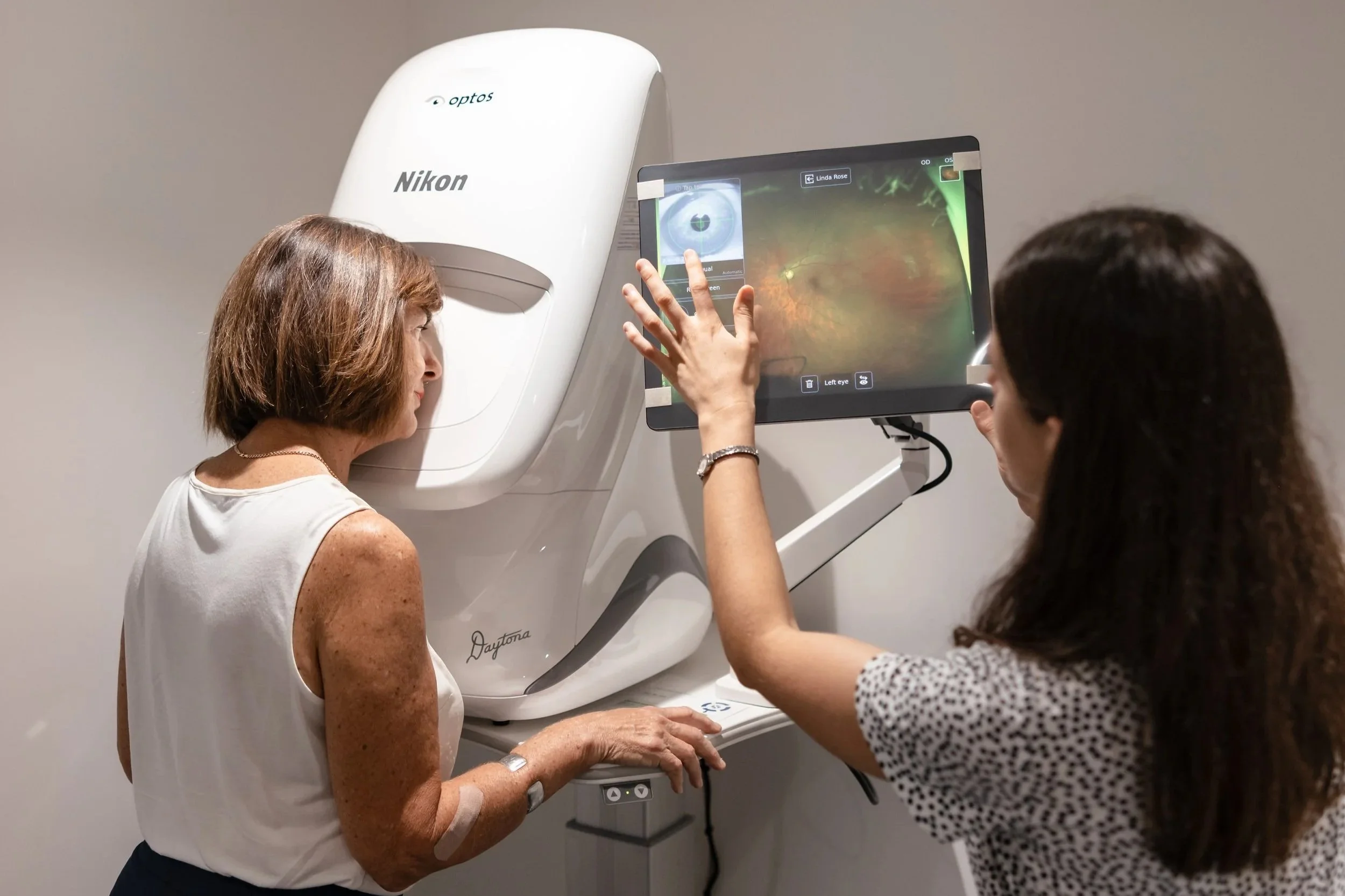
Optos Daytona - Wide field imaging for the back of the eye.
This combination of clinical examination and imaging helps us:
detect retinal tears or early detachment
differentiate benign vitreous changes from urgent pathology
guide timely referral when required
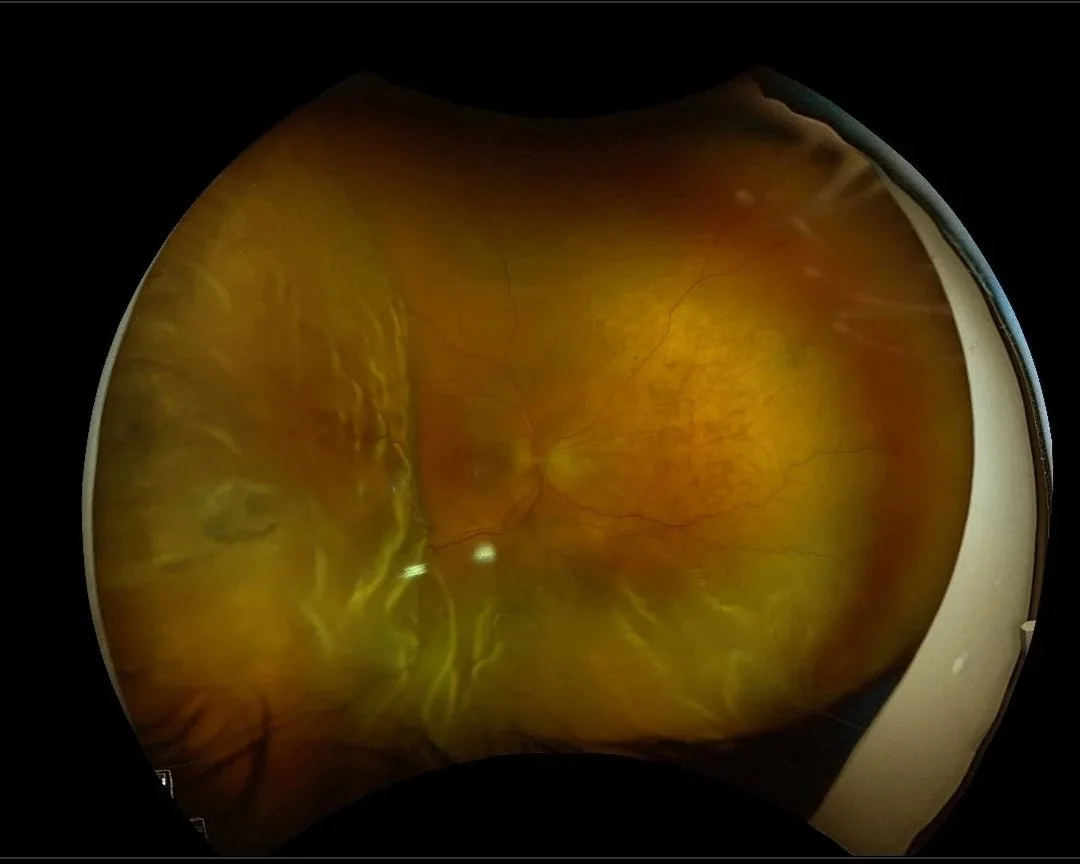
Optos ultra-widefield retinal imaging showing retinal detachment.
What happens if something is found?
If a retinal tear or detachment is suspected, urgent referral is arranged.
Depending on findings, management may include:
monitoring in stable cases
local ophthalmology care
referral to vitreoretinal specialists
or urgent hospital-based care, including Sydney Eye Hospital if required
Early detection is critical for protecting long-term vision outcomes.
Reassurance
Most floaters and flashes are benign and related to natural age-related changes inside the eye. However, because some cases are associated with retinal tears, prompt assessment is important.
Early review provides reassurance when everything is stable and ensures rapid management when it is not.
If you notice symptoms
If you notice new floaters, flashes of light or a shadow/veil in your vision, do not wait to see if symptoms settle.
Early optometric assessment is the most appropriate first step in retinal triage and allows timely coordination of care if needed.
Rose Optometry prioritises urgent eye concerns and will endeavour to provide prompt assessment, including same-day appointments where appropriate.
FAQ
Are floaters normal?
Yes, floaters are common and often due to normal age-related changes in the vitreous gel inside the eye.
Are flashes of light serious?
They can be benign but may also indicate vitreous traction on the retina, so new flashes should always be checked.
What does a curtain in vision mean?
A curtain or shadow in vision may indicate retinal detachment and requires urgent assessment.
Do I need to see a doctor or optometrist first?
Optometric assessment is typically the first step, as it allows immediate retinal examination and referral if required.
What if I can’t see an urgent appointment online?
If you can’t find an urgent appointment online, contact our team and we’ll do our best to see you as soon as possible.
